

A Tribute
Live Like Everyone You Meet Could Die Tomorrow

“At the end of life, our questions are very simple: Did I live fully? Did I love well?” — Jack Kornfield
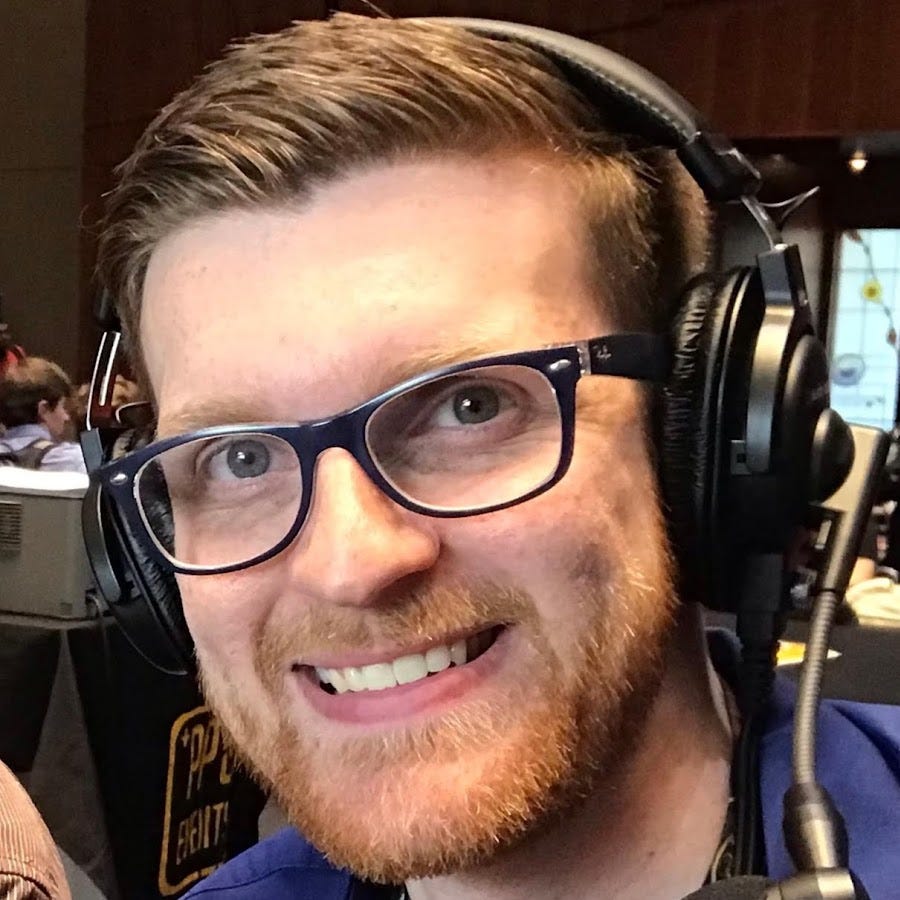
Death doesn’t wait for convenient moments. I learned this week that a good friend, and icon of the gaming world, Alex Cimo (aka Cimmoooooooo) passed away. We first met during the initial reveal of my game Bakugan, where Alex was one of over a dozen VIPs flown in to get ane early preview of the game. His keen wit, insight, and charm won me over instantly. More than anyone else in the room, he understood both the nuances of design and the art of marketing and how they intertwine. Most importantly, he united it all with a genuinely good soul, using his keen strategic mind to grow not only his own brand but to help everyone in his community. We collaborated on some fun projects, including a hexagon cage match watched by over 500K people.
Even after I stopped working on Bakugan, we remained friends for many years, sharing laughs, stories, and business ideas over meals and games. I’ll always remember his vibrant positivity and infectious laugh. The world is a better place for him having lived in it, and it is a little bit darker for having lost him.
When I heard the news, I found myself thinking about the first time I experienced the loss of someone close to me. Years ago, I wrote the piece below, but never published it. At the time it felt too raw and too personal for me to share through a game design blog, but with Alex’s passing I was reminded of why I wrote it in the first place.
One of the hardest lessons in life is learning that people who matter most will not always be here. Intellectually we all know this, but living through it is a different matter altogether. We assume there will be another game night, another text, another chance to talk. But then, suddenly, there isn’t.
I don’t get another chance to laugh with Alex, to share a great meal, or discuss our favorite games. What I have is gratitude for the time we’ve shared and another reminder to not take these experiences for granted.
So, in Alex’s honor I’d like to share the story that first taught me that lesson.
Don’t Wait
The garbled announcement crackled through the bustle of Dulles International Airport: “Would passenger Justin Gary please report to a white courtesy phone immediately.”
I was standing at my gate, minutes away from boarding a flight to Cabo for a long overdue vacation. Sun, sand, and relaxation beckoned. When the announcement first played, I dismissed it as background noise. This was someone else’s interruption, someone else’s story. But hearing my name a second time, an inexplicable heaviness settled in my chest. I’d never even seen a white courtesy phone. What could be so urgent it couldn’t wait until I landed?
I made my way to the nearest phone and picked up the receiver. After giving my name, they connected me to an operator with a message. “Your grandmother is in the hospital in emergency care. Your mother requests that you book a flight to New York immediately.”
The bustling sounds of the airport, once a distracting buzz, now seemed distant, muffled by the shock that wrapped around me like a thick fog. My hands trembled slightly as I clutched the phone, the plastic suddenly feeling too real, too solid in my grasp. The thought of my grandmother, lying in a hospital bed, vulnerable and in need, sent a jolt of urgency through me, cutting through the numbness. I hung up the phone as tears welled up, unbidden, blurring my vision as I struggled to maintain a semblance of control in the middle of the crowded terminal. I had to get to her, to be there, to hold her hand. The vacation, the excitement of a few moments ago, all seemed trivial now. I canceled my connecting flight and rebooked to New York.
The days that followed were a blur of pain, heartache, and tears. My grandmother had gone in for a routine physical only to be blindsided by the diagnosis of a severe blood clot. I saw her just before they wheeled her into surgery, huddled in thin white sheets and attached to beeping machines. The strong and vibrant woman I had known seemed frail, small, and scared.
That was the last time I saw her alive.
I stayed in New York for two weeks to attend the funeral and sit shiva. It was a surreal procession of faces and voices. Friends and family, orbiting the epicenter of our loss, brought food, tales, and tears, enveloping my grandfather, hosting a vigil for a love spanning half a century.
In games, the pain of death is temporary. You can always restart with another life, lessons learned, and health restored. This time there was no restart. The hours I had with her were the only hours I would ever get.
Life has a way of slipping into routine, lulling us into the illusion of infinite time. Until one day, a loved one says, “See you soon,” and doesn’t. I resolved that day to never take time with loved ones for granted. You know the old line about living each day like it’s your last. I turned it outward: Live like everyone you meet could die tomorrow. It sounds morbid but in practice it’s the opposite. It makes you generous with your attention, quick to forgive, and slow to leave a room angry.
The goal isn’t to remove the pain of death and loss. That pain is the flipside to love. It is proof you had a connection worth mourning. The pain never disappears, but neither does the love. I will always remember the days surrounding my grandmother’s death. But I also remember the smell of her cooking, the feel of her hand as it held mine, the sound of her laugh, and the warmth of her love.
I have one ask of you if you’ve read this far. Think of someone you love and how grateful you are for them. If they are alive, reach out and tell them what they mean to you. If they aren’t, write something below about the positive difference they made in your life. Notice how you feel after taking this simple action. If you like, share this post so others can feel that too. Let this tragic event spawn a chain of love and connection that lives on far beyond Alex or any of us.
—Justin
Thank you for sharing this. It was beautiful.
Thank you for sharing your perspective. At the end of our life the only thing that will have mattered is whether we spent enough time with our children (those lucky enough to have them), with our life partners, and with our friends.