


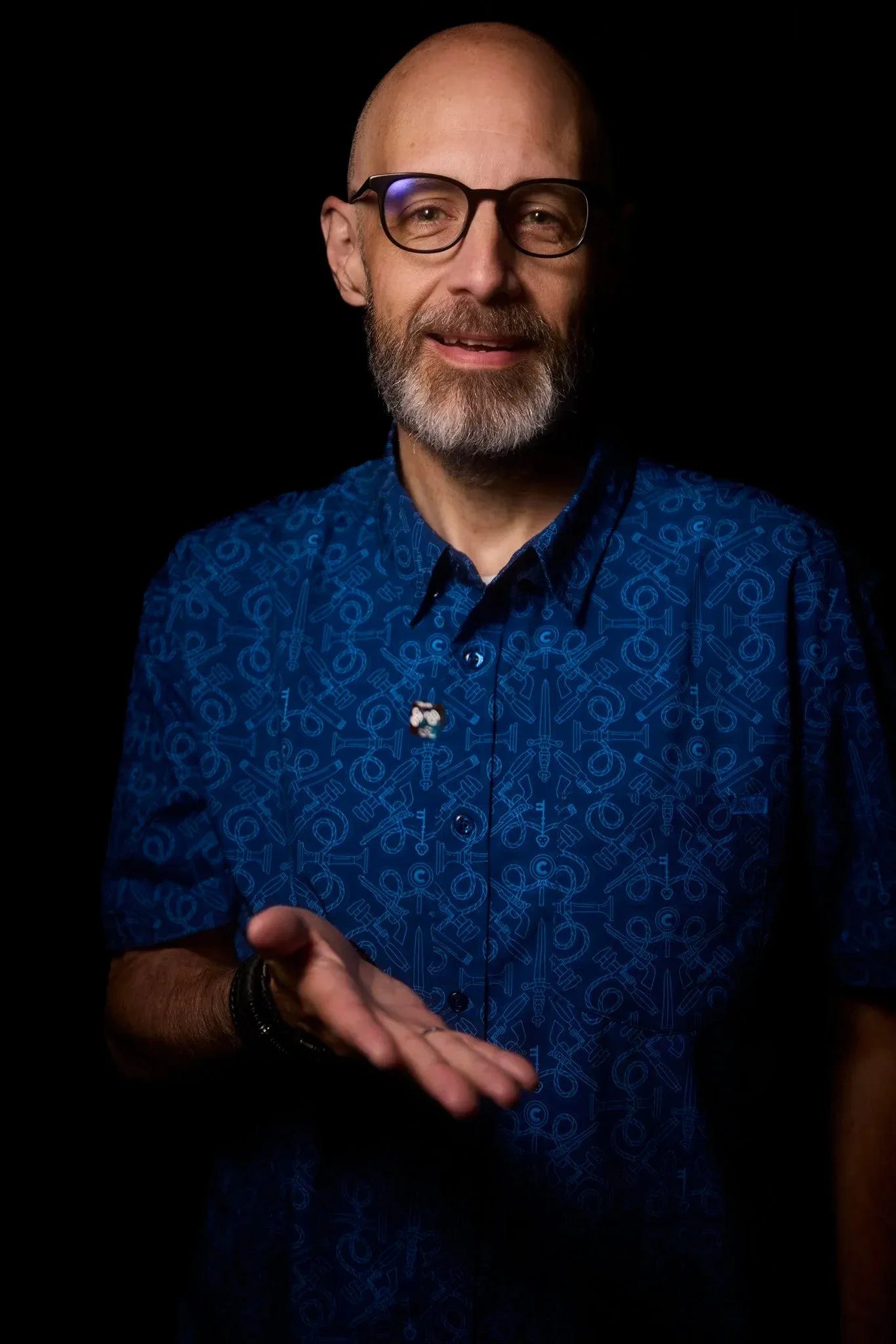
About Scott Morris
Scott Morris is the founder and CEO of Steel Wing Games, a boutique tabletop publisher focused on approachable, high-quality games, as well as the Global Brand Director for Lucky Duck Games under Goliath. A two-decade industry veteran, Scott previously served as Chief Sales and Marketing Officer at Lucky Duck and President of Passport Game Studios. His latest project, Rainbow Boulevard (designed by Adam Wyse), represents a decade-long journey of patience, personal resilience, and deep human connection. In this deeply moving episode, Scott shares the origin of Steel Wing Games, the harrowing personal tragedy that put his career on pause, and why game publishers aren’t just selling boxes, they’re building lifelong memories. Plus, we unpack the mechanics of eliminating player downtime, the shift from positions to principles in design debates, and what it really takes to launch a crowdfunding campaign today.
Connect with Scott:
Website: steelwinggames.com
Kickstarter: Rainbow Blvd.
Check out the Previous Interview:

Ah-ha! Justin’s Takeaways
We Are Making Memories, Not Just Games: Realize what business you’re actually in. You aren’t just shipping cardboard, plastic, and rulebooks—you are engineering shared human moments. When a game helps a family connect or creates an unforgettable night around the table, that emotional impact is the real product. Always design with that core human memory in mind.
Patience and Priorities Win the Long Game: Life throws brutal curveballs, and true alignment with your creative partners goes way beyond a contract. When Scott’s wife suffered a catastrophic brain injury in 2017, lead designer Adam Wyse didn’t take Rainbow Boulevard elsewhere; he patiently waited years for Scott to put his family first. Choosing the right people who share your values and vision will always outlast short-term market rushes.
Pay Attention to Downtime: When evaluating a game design, don’t just watch what the active player is doing on their turn, instead you watch everyone else when it’s not their turn. If players immediately pull out their phones, you have a massive red flag. Designing mechanics that incentivize players to stay locked into every turn, like scoring opportunistically off an opponent’s placement in Rainbow Boulevard, turns passive waiting into active engagement.
Crowdfunding Demands Your Own Audience: The crowdfunding landscape has shifted fundamentally over the last decade. You can no longer rely on a platform like Kickstarter to discover your game or build your community from scratch. Today, your design has to stand on its own merits, and you must do the work of bringing a dedicated audience to the starting line long before you press launch.
Show Notes
“We’re not making games anymore; we make memories. That’s what we’re doing.” (00:07:10)
This mindset completely changes how you approach game development. When you realize that the cardboard in the box is just a catalyst for human connection, every design decision gets filtered through a different lens. You stop agonizing purely over sterile mathematical balance and start focusing on creating those high-impact table moments that people talk about years later.
“Understanding the difference between principles and positions matters a lot” (00:37:35)
When design debates get heated, teams usually get trapped fighting for specific positions like a certain card draw, a dice mechanic, or a turn structure. The key to breaking those deadlocks is pulling the conversation back to first principles. Once everyone agrees on the core goal, like eliminating player downtime or mitigating turn order advantage, you open up dozens of different mechanical paths to get there together as a team.
“The reason I called it Steel Wing is I’ve been in the industry a while... I really want to leave this place better than I found it. So the concept is that I wanna use my experience, the steel, to lift other people up, the wing, and give people opportunities.” (00:59:45)
Success in creative industries shouldn’t just be about building your own personal empire; it’s about opening doors for the next generation. Scott’s commitment to pairing industry experience with brand-new talent on every single project is a masterclass in stewardship. Bringing fresh perspectives into the tabletop space keeps our media vibrant, diverse, and constantly evolving.

P.S. If you are interested in working with me directly on your project, and learning from my mistakes rather than making your own, you can join my Think Like a Game Designer: Design Lab.


